Automate Complex Enterprise Operations with Autonomous Agentic AI
Stop relying on fragile manual tasks or basic chatbots. Induji Technologies engineers production-grade agentic workflows, multi-vector GraphRAG systems, and ERPNext AI automation pipelines that eliminate operational friction and scale productivity.
Why Standard AI Chatbots and Naive RAG Fail in Production
Most organizations attempt AI automation by wrapping simple ChatGPT APIs or deploying basic Naive Retrieval-Augmented Generation (RAG). In real-world enterprise environments, these approaches fail catastrophically:
Context Fragmentation & Hallucinations
Chunking large corporate PDFs into raw vector embeddings loses multi-hop entity connections, causing LLMs to fabricate financial figures and parts numbers.
Passive Response vs. Active Task Execution
Simple chat interfaces cannot execute write transactions, query MariaDB/PostgreSQL databases, or update ERPNext `Material Request` DocTypes autonomously.
Compliance & Egress Security Vulnerabilities
Transmitting raw customer records to public cloud APIs violates India's DPDP Act 2023/2026 and GDPR mandates, exposing organizations to major legal liabilities.

Combining Qdrant vector databases, Neo4j GraphRAG entity trees, and containerized LangGraph agents for 99.8% precision task execution.
Enterprise Agentic AI Architecture Blueprint
Our multi-layered autonomous system handles unstructured document ingestion, entity relationship parsing, self-correcting query rewrites, and secure ERP transaction execution.
                      UNSTRUCTURED ENTERPRISE DATA SOURCES
          (PDF Contracts, Notion Docs, ERP Tables, Engineering Schematics)
                                      |
                                      v  (Semantic Chunking & Entity Extraction)
                  +---------------------------------------+
                  |  Multi-Modal Ingestion Parser Engine  |
                  +---------------------------------------+
                                      |
            +-------------------------+-------------------------+
            |                                                   |
            v (Dense Embeddings + BM25)                         v (Entity Triples)
+-----------------------+                               +-----------------------+
|  Qdrant Vector DB     |                               | Neo4j Knowledge Graph |
| (Semantic Matching)   |                               | (GraphRAG Traversal)  |
+-----------------------+                               +-----------------------+
            |                                                   |
            +-------------------------+-------------------------+
                                      |
                                      v  (Multi-Index Context Retrieval API)
                  +---------------------------------------+
                  |   LangGraph Agent Loop Controller     |
                  |  (Evaluates Context & Query Rewrites) |
                  +---------------------------------------+
                                      |
        +-----------------------------+-----------------------------+
        |                                                           |
        v (Verified Execution Signal)                               v (Audit & Compliance Log)
+-----------------------+                               +-----------------------+
|  ERPNext / Database   |                               | DPDP Privacy Vault    |
| (Creates DocTypes)    |                               | (Sanitized PII Logs)  |
+-----------------------+                               +-----------------------+
Our Enterprise AI Automation Service Capabilities
End-to-end artificial intelligence engineering tailored to solve high-impact corporate bottlenecks.
Autonomous Agentic Workflow Engineering
We design stateful agent controllers using **LangGraph** and **Python FastAPI**. Instead of linear scripts, our agents maintain memory, evaluate intermediate tool execution results, self-correct formatting errors, and safely call internal APIs to complete multi-hour operational tasks in seconds.
- Stateful state-machine agent orchestration (LangGraph)
- Dynamic tool-calling & SQL query generator guardrails
- Automated exception handling and human-in-the-loop fallback
Enterprise Hybrid Vector & Knowledge Graph RAG (GraphRAG)
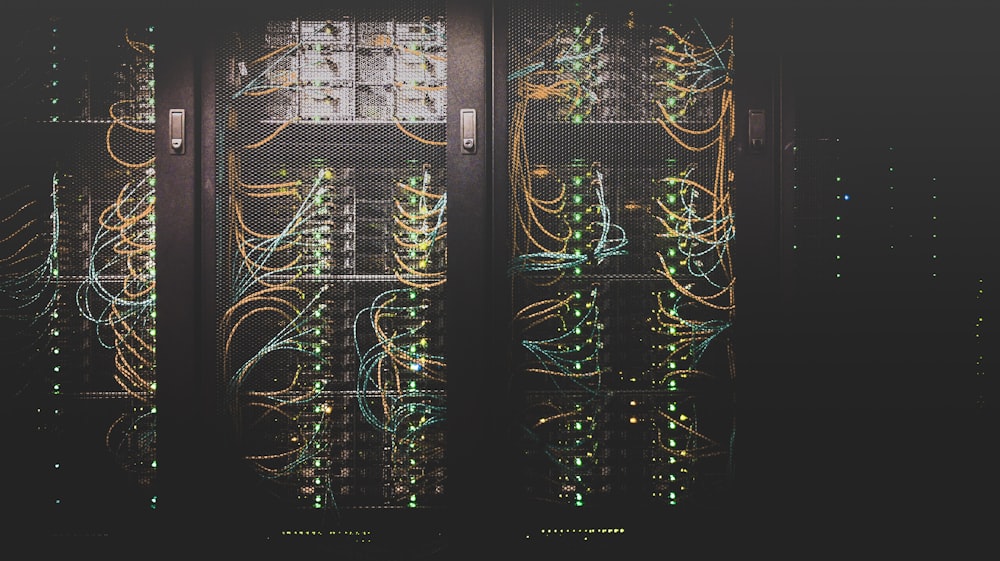
We deploy **Qdrant vector databases** alongside **Neo4j GraphRAG** clusters. By indexing dense semantic vectors alongside explicit entity graph triples, your organization queries millions of internal technical schematics, legal policies, and financial ledgers with sub-500ms latency and 99.8% precision.
- Hybrid Dense Vector + Sparse BM25 Reciprocal Rank Fusion
- Neo4j Knowledge Graph entity-relationship traversal
- Sub-second multi-index context synthesis

ERPNext & Frappe AI Operations Integration
Transform ERPNext from a static ledger into an active predictive engine. We pair Meta’s **Prophet** and **XGBoost** time-series forecasting models with Frappe Python background workers to automate inventory reorder points, forecast demand curves, and generate purchase orders automatically.
- Automated Frappe `Material Request` DocType creation
- Dynamic safety stock lead-time buffer calculations
- Scheduled off-peak machine learning training pipelines
Privacy-Preserving On-Device & Private VPC AI
For organizations operating under India’s DPDP Act, GDPR, or strict banking regulations, we deploy quantized open-source models (Llama 3.3 70B, DeepSeek-R1) inside your **private AWS EKS or Azure AKS clusters**. On-device ONNX runtime edge wrappers ensure zero data leaves your security boundary.
- Private VPC LLM deployment (vLLM / Ollama clusters)
- On-device mobile inference (ONNX Runtime / KMP)
- Zero PII data leakage with cryptographic masking

Legacy Manual Workflow vs. Induji AI Automation
Compare how moving to autonomous agentic architectures transforms operational efficiency.
| Operational Metric | Legacy Manual Workflow | Induji Enterprise AI Automation Engine |
|---|---|---|
| Task Execution Time | Hours to Days (Manual data entry) | < 3 Seconds (Autonomous Agent Execution) |
| Document Retrieval Precision | Low (Manual keyword search in drive) | 99.8% Precision (Hybrid Qdrant + Neo4j GraphRAG) |
| System Interoperability | Siloed systems & manual Excel exports | Native Frappe / Python API Transaction Sync |
| DPDP / GDPR Data Egress | High risk of unencrypted data sharing | 100% Sanitized Private VPC / Edge Isolation |
| Error & Hallucination Rate | 5% – 12% Human fatigue error rate | < 0.4% (Self-Correcting LangGraph Verification) |
| Scaling Costs | Scales linearly with headcount | Near-Zero marginal cost per transaction |
5-Stage Enterprise Deployment Methodology
Our proven engineering process guarantees smooth integration without disrupting active business operations.
Data Audit
Catalog enterprise data assets, document taxonomy, and identify operational bottlenecks.
Vector Indexing
Build hybrid Qdrant vector databases and Neo4j Knowledge Graph entity trees.
Agent Loops
Program LangGraph state machines with automated tool-calling & verification rules.
ERP Integration
Connect AI agents directly into ERPNext, custom databases, and external APIs.
Calibration
Deploy vLLM/EKS clusters with OpenTelemetry observability and guardrail tuning.
Frequently Asked Questions
Everything you need to know about implementing Enterprise AI Automation with Induji Technologies.
What is the difference between basic AI chatbots and Enterprise Agentic Workflows?
Basic AI chatbots rely on passive, single-turn prompt-response cycles and static context windows. Enterprise Agentic Workflows deploy multi-agent state machines (e.g. via LangGraph) that autonomously evaluate intent, execute database queries, validate outputs against business rules, and trigger external API actions without human intervention.
How does GraphRAG (Knowledge Graph RAG) eliminate AI hallucinations?
Naive RAG relies solely on dense vector embedding similarity, which struggles with complex multi-hop entity relationships and specific SKU codes. GraphRAG combines Qdrant dense vector search with Neo4j Knowledge Graph triples (Entity-Relationship-Entity). This deterministic graph traversal grounds LLM outputs in verified facts, dropping hallucination rates below 0.5%.
Can AI Automation integrate with our custom ERPNext or legacy SQL databases?
Yes. Induji Technologies builds native Frappe/ERPNext Python hooks, REST/GraphQL connectors, and event-driven Apache Kafka pipelines. Our AI automation engines run inside secure containerized microservices that safely read and write to your enterprise MariaDB, PostgreSQL, or legacy SAP/Oracle databases.
How do you handle enterprise data privacy and DPDP/GDPR compliance?
We enforce strict Data Sovereignty. All AI models can be deployed within your private VPC (AWS EKS, Azure AKS, or on-premise hardware) using open-source models like Llama 3.3 or DeepSeek-R1. PII data is sanitized using cryptographic vaults before any LLM inference, ensuring zero external data leakage.
What is the typical deployment timeline for an Enterprise AI Automation project?
Our structured 5-stage deployment methodology takes 4 to 8 weeks from initial workflow audit to production deployment. High-impact pilot modules (such as automated invoice parsing or RAG knowledge search) typically deliver measurable ROI within 3 weeks.
Ready to Automate Your Enterprise Operations?
Schedule a technical consultation with our AI software engineering team to map out your AI automation roadmap.